
MEMPENING
INTRODUCTION
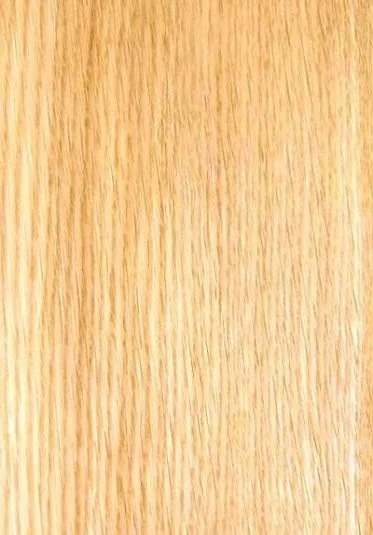
The Standard Malaysian Name for the timber of Lithocarpus spp. and Quercus spp. (Fagaceae). Vernacular names applied include mempening (Peninsular Malaysia, Sabah and Sarawak), which is widely used throughout the country and sabah oak in Sabah in obvious reference to its close botanical relationship with the temperate oaks. Major species include Lithocarpus cantleyanus, L. cyclophorus, L. encleisocarpus, L. ewyckii, L. gracilis, L. lampadarius, L. lucidus, L. maingayi, L. sundaicus, L. urceolaris, L. wallichianus; Quercus argentata and Q. gemelliflora. The sapwood is not always clearly defined but is usually lighter in colour than the heartwood, which varies between yellow-brown and red-brown, sometimes dark red.
Also known as Indian oak (India); Kalal, Mempening batu, Mempening bunga, Mempening sunda, Obu, Pasang, Pinanak, Takalet and Uba (Indonesia); New Guinea oak (Papua New Guinea); Menaring, Oak and Pangnan (Philippines); Ko and Ko muu (Thailand); and Gie (Vietnam).
DENSITY
The timber is hard to very hard and moderately heavy to heavy with a density of 575-1,010 kg/m3 air dry. The timber is classified under Medium Hardwood in Malaysia.
NATURAL DURABILITY
The timber is moderately durable under exposed conditions.
TEXTURE
Texture is rather coarse and uneven due to the irregular distribution of the vessels and due to the wide rays. Grain is straight to interlocked and a true oak-line silver figure is prominent on the radial surface.
STRENGTH PROPERTIES
The timber falls into Strength Group A (Engku, 1988b) or SG 4 (MS 544:Part 2:2001).
MACHINING PROPERTIES
It is easy to saw when green but is slightly difficult to work when air dried. The planed surface produced is smooth but the quality of finish when turned is rough.
NAILING PROPERTY
The nailing property is poor.
AIR DRYING
The timber seasons moderately slowly, with only slight bowing, end-checking, splitting and moderate staining as the main defects. 13 mm thick boards take 2 months to air dry, while 38 mm thick boards take 5 months.
SHRINKAGE
Shrinkage is high, especially in the tangential direction. Radial shrinkage averages 1.9% while tangential shrinkage averages 4.2%.
USES
The timber is suitable for heavy and medium construction if protected from termite attacks. It is also suitable for interior finishing, panelling, mouldings, joinery, cabinet making, decorative and high class furniture, flooring, staircase (apron lining, handrail and sprandrel framing), vehicle bodies (framework and floor boards), pallets (heavy duty and permanent type), plywood, columns (light duty), railway sleepers, tool handles (impact), door and window frames and sills, posts, beams, joists, rafters as well as telegraphic and power transmission posts and cross arms.
REFERENCES
Engku Abdul Rahman Chik. 1998b. Basic and Grade Stresses for Strength Groups ofMalaysian Timbers. Malayan Forest Service Trade Leaflet No. 38. The Malaysian Timber Industry Board and Forest Research Institute Malaysia, Kuala Lumpur. 13 pp.
MS 544:Part 2:2001. Code of Practice for the Structural Use of Timber: Permissible Stress Design of Solid Timber.
Wong, T. M. 1982. A Dictionary of Malaysian Timbers. Revised by Lim, S. C. & Chung, R. C. K. Malayan Forest Records No. 30.Forest Research Institute Malaysia, Kuala Lumpur. 201 pp.
credited to : Malaysian Timber Council