
MERPAUH
INTRODUCTION
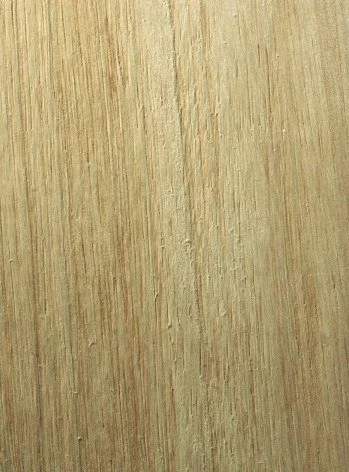
The Standard Malaysian Name for the timber of Swintonia spp. (Anacardiaceae). Vernacular names applied include merpauh (Peninsular Malaysia) with various epithets, periang (Peninsular Malaysia), pitoh (Sarawak), rengas (Sabah) and selan (Sarawak). Major species include S. floribunda var. penangiana, S. schwenkii and S. spicifera. The sapwood is light brown with a grey or pink tinge and is not sharply differentiated from the heartwood, which is light grey-brown with a pink tinge. Some trees develop a corewood, which is streaked with orange and red lines.
Also known as Kereta and Maban (Indonesia); Muom (Cambodia); Civit, Shitle and Taung-thayet (Myanmar); Civit (Pakistan); Kaluis and Lomarou (Philippines); Muom (Vietnam).
DENSITY
The timber is a Medium Hardwood with a density of 640-880 kg/m3 air dry.
NATURAL DURABILITY
Untreated specimens of merpauh measuring 50 mm x 50 mm x 600 mm achieved an average service life of 1.5 years at the testing ground at the Forest Research Institute Malaysia (FRIM). This placed the timber under the non durable category. The timber is readily attacked by insects and fungi, especially staining fungi, which discolour both the sapwood and heartwood.
PRESERVATIVE TREATMENT
Based on trials carried out on two species of merpauh, it was found that the treatability of the timber varies considerably, from very easy to average.
TEXTURE
Texture is moderately coarse but even, with interlocked grain.
STRENGTH PROPERTIES
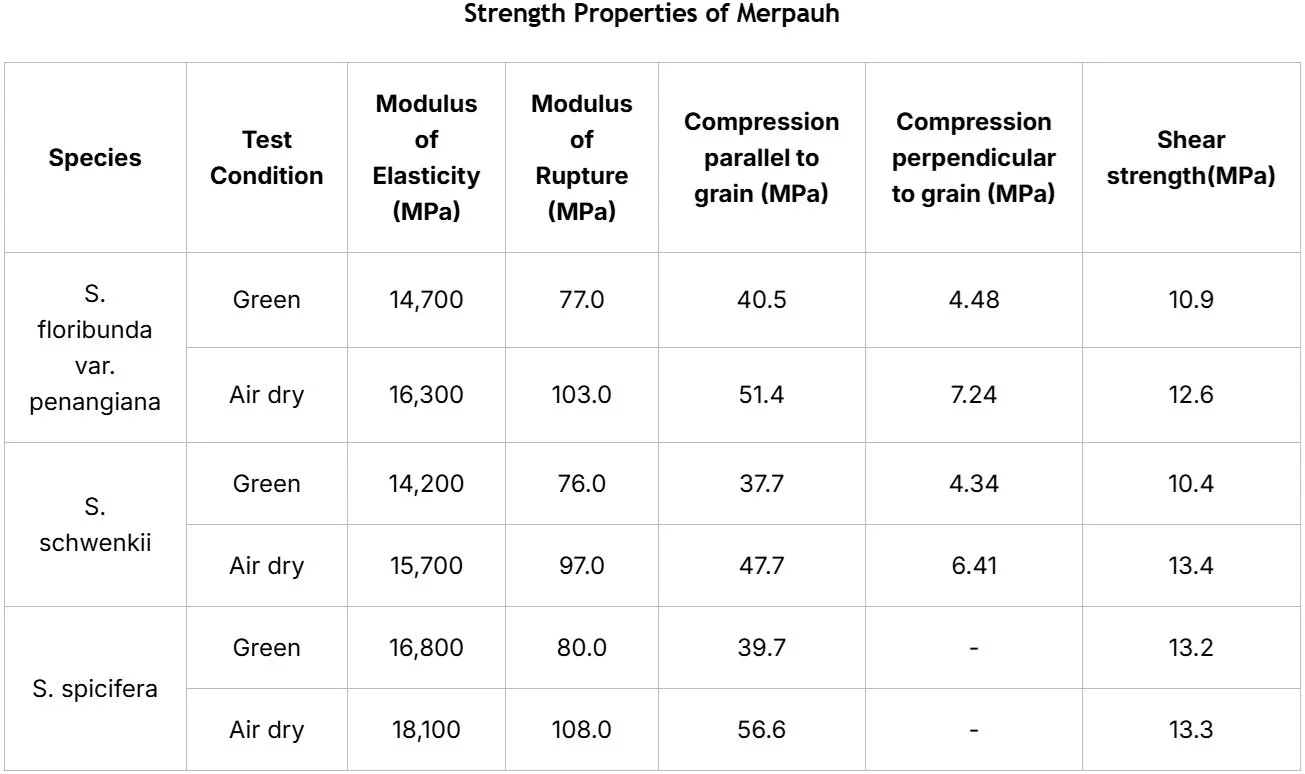
The timber falls into Strength Group B (Engku, 1988b) or SG 4 (MS 544:Part 2:2001).
MACHINING PROPERTIES
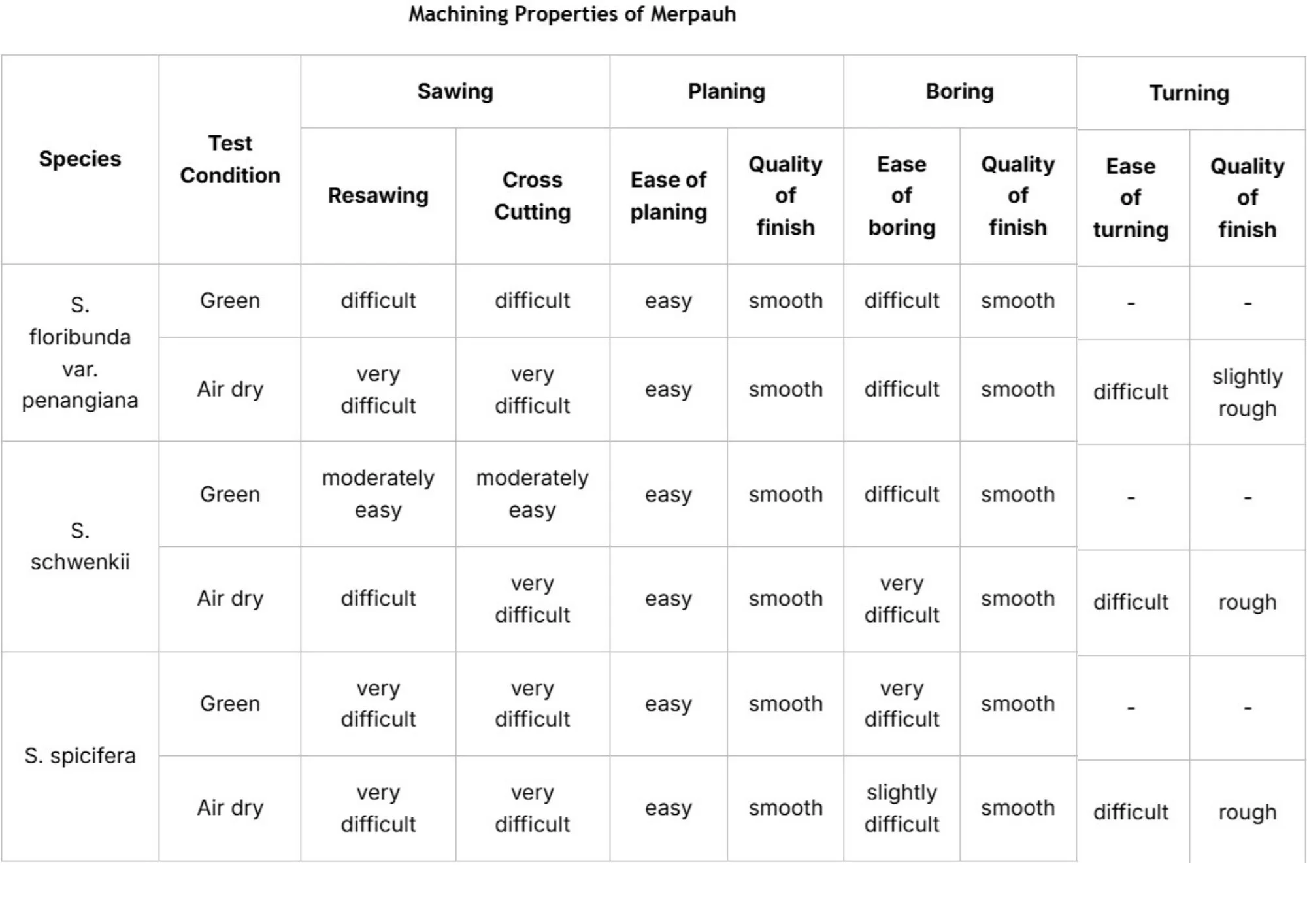
It is difficult to very difficult to saw and cross-cut but is easy to plane and the surface produced is smooth.
NAILING PROPERTY
The nailing property ranges from good to very poor depending on species.
AIR DRYING
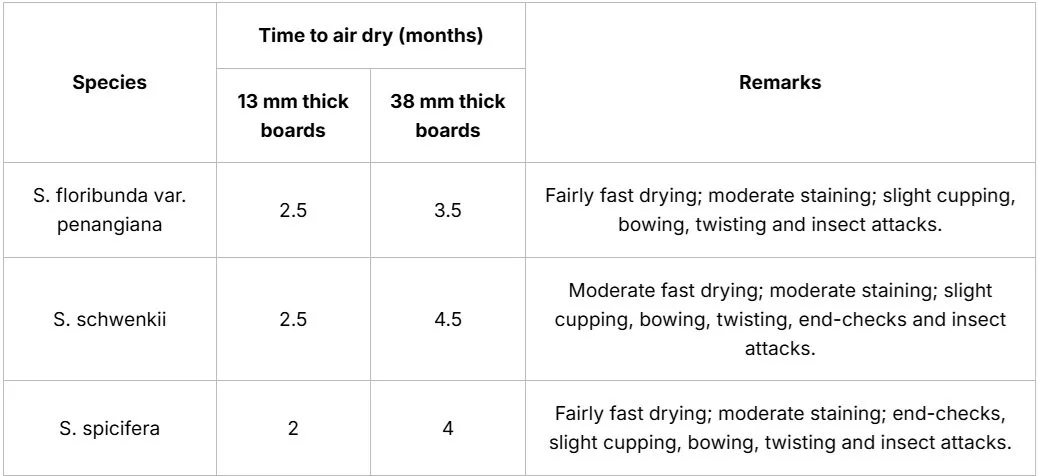
The seasoning properties of some species tested are summarised below:
KILN-DRYING
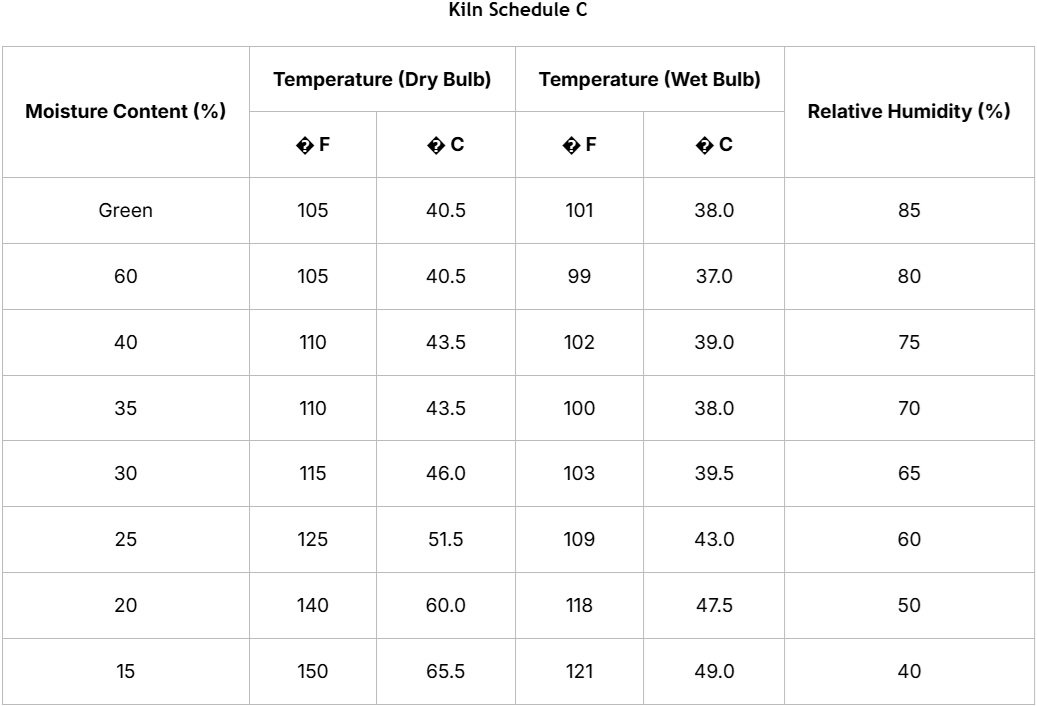
Kiln Schedule C is recommended.
SHRINKAGE
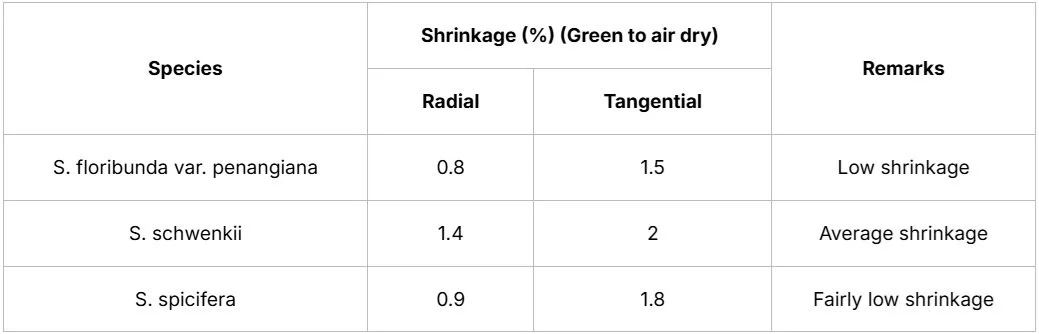
The shrinkage of merpauh is summarised below:
DEFECTS
Logs left in the open will sustain fairly severe attacks by insects and staining fungi. While the sapwood is very prone to stain and rot, the heartwood will be discoloured by the stain.
USES
The timber is suitable for light and medium construction under cover. The attractively streaked corewood, if available is suitable for high-class joinery and furniture. The timber is also suitable for interior finishing, panelling, mouldings, partitioning, flooring, door and window frames and sills, plywood, telegraphic and power transmission posts and cross arms, piling and railway sleepers.
REFERENCES
Engku Abdul Rahman Chik. 1998b. Basic and Grade Stresses for Strength Groups ofMalaysian Timbers. Malayan Forest Service Trade Leaflet No. 38. The Malaysian Timber Industry Board and Forest Research Institute Malaysia, Kuala Lumpur. 13 pp.
Menon, P. K. B. 1986. Uses of Some Malaysian Timbers. Revised by Lim, S. C. Timber Trade Leaflet No. 31. The Malaysian Timber Industry Board and Forest Research Institute Malaysia, Kuala Lumpur. 48 pp.
MS 544:Part 2:2001. Code of Practice for the Structural Use of Timber: Permissible Stress Design of Solid Timber.
Sim, H. C. 1984. Malaysian Timbers – Merpauh. Malaysian Forest Service Trade Leaflet No. 82. The Malaysian Timber Industry Board and Forest Research Institute Malaysia, Kuala Lumpur. 8 pp.
Wong, T. M. 1982. A Dictionary of Malaysian Timbers. Revised by Lim, S. C. & Chung, R. C. K. Malayan Forest Records No. 30. Forest Research Institute Malaysia, Kuala Lumpur. 201 pp.
credited to : Malaysian Timber Council